Improving indoor temperatures
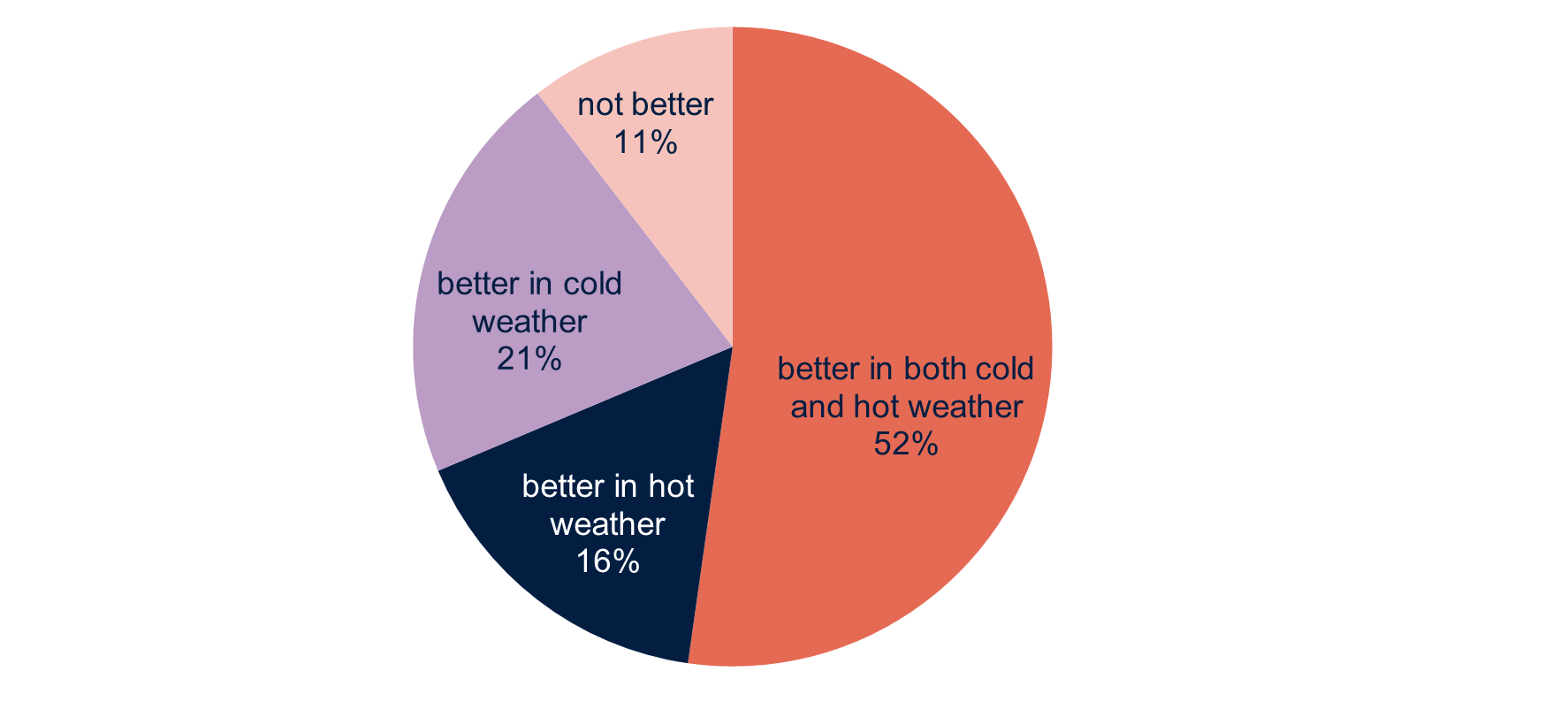
Indoor temperatures in the main living area of the home were reported as improved for 89 per cent of participants.
Households installed efficient electric heating and cooling, or rooftop solar to offset running costs. Improved affordability increased people’s capacity to maintain healthy indoor temperatures.
Ruth, who lives in a rental arranged through family, has fibromyalgia and is the sole carer of her son with autism, explained the benefit of installing rooftop solar through CSH:
[I’m now] able to heat and cool my home whenever it’s needed, rather than a few hours a day, which was previously all I could afford.
Two-thirds of participants reported that after making upgrades through CSH they are now using their heating or cooling more to manage their health.
Indoor temperatures
More than half the participating households experienced improved indoor temperatures in both cold and hot weather and a further 37 per cent experienced improvements to one or the other.
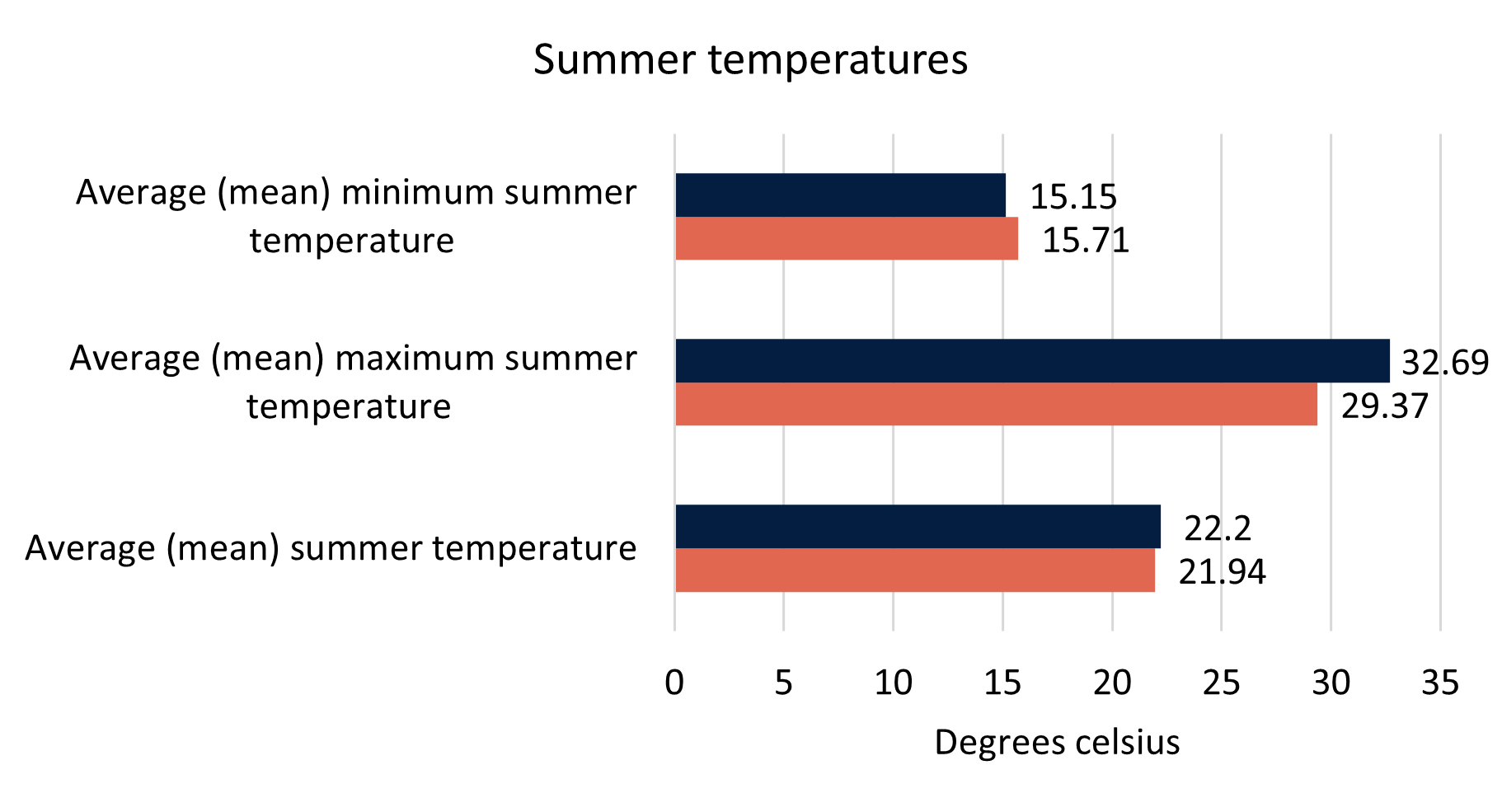
In-home temperature monitoring identified that living areas that had a reverse cycle air conditioner (RCAC) installed, or solar installed to run existing RCAC though CSH, maintained healthier temperatures than non-upgraded rooms. This included lower mean and maximum temperatures and higher minimum temperatures across both day and night times.
Thermal comfort
Some 90 per cent of participants also reported improved indoor comfort ratings. Summer comfort ratings rose from 37 per cent to 78 per cent and winter comfort ratings from 51 per cent to 74 per cent.
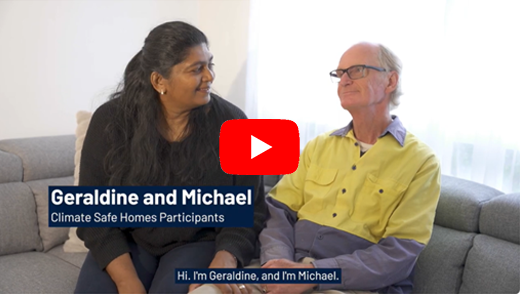
Geraldine, who installed solar panels to offset the running costs of the air conditioner and air purifier she relies on for her health, explains in this video how she now has a ‘safe’ room where she can stay comfortable. This is essential during thunderstorms when she is especially at risk of asthma.
Read our research summary to learn more about the Climate Safe Homes in-home temperature monitoring In-home temperature monitoring: Climate Safe Homes
Return to the Climate Safe Homes project page.