Testing and refining the model
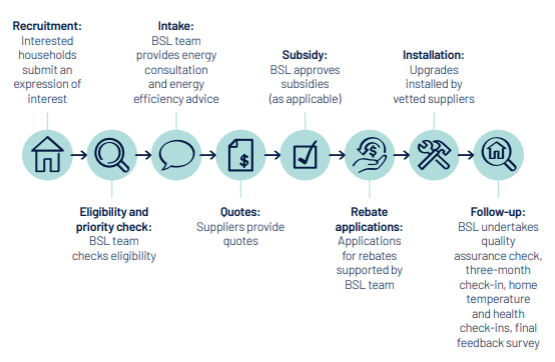
The Climate Safe Homes pilot developed a model to improve indoor temperatures for people living with a temperature-impacted chronic health condition or disability and low income.
The model:
- reaches those most in need of support to improve indoor temperatures in their home
- promotes and supports householder agency in managing indoor temperatures for health
- decreases participation burden and simplifies the complexities of residential energy efficiency upgrades
- provides information, navigation and financial support
- creates most benefit at least cost.
Initially, Climate Safe Homes aimed to utilise the established, trusted relationships between health practitioners and their patients to identify those who would benefit most from a home energy upgrade and make referrals into the program. Subsequently, due to recruitment barriers, participants were recruited through energy providers.
As one health practitioner explained:
[The] main barrier is remembering the program among all of the other issues we are often assisting our clients with. – Allied health outreach worker
The pilot provided wholistic supports
These included:
- information
- navigation support
- links to trustworthy suppliers
- access to available grants and rebates
- an additional subsidy for upgrades of reverse-cycle air conditioning (for heating and cooling), rooftop solar PV and insulation.
Households that were able made a co-contribution towards the cost of upgrades. Upgrades were fully funded for households that were unable to contribute.
Where needed, BSL staff provided information and advice to households on entitlements and support such as energy concessions, utility relief grants (URGs) and best available energy market offers. In some cases, staff supported households to access concessions and URGs. In a small number of cases, staff also referred households to social and community services and financial counselling.
All participants were provided with information on how to prepare for heatwaves and very cold conditions. In many cases this information reinforced existing behaviours. In a few it led to important changes to the way householders managed their health in extreme weather conditions.